
If you’ve ever read wellness advice and walked away feeling worse about yourself instead of better, you’re not alone.
That reaction isn’t a personal failure.
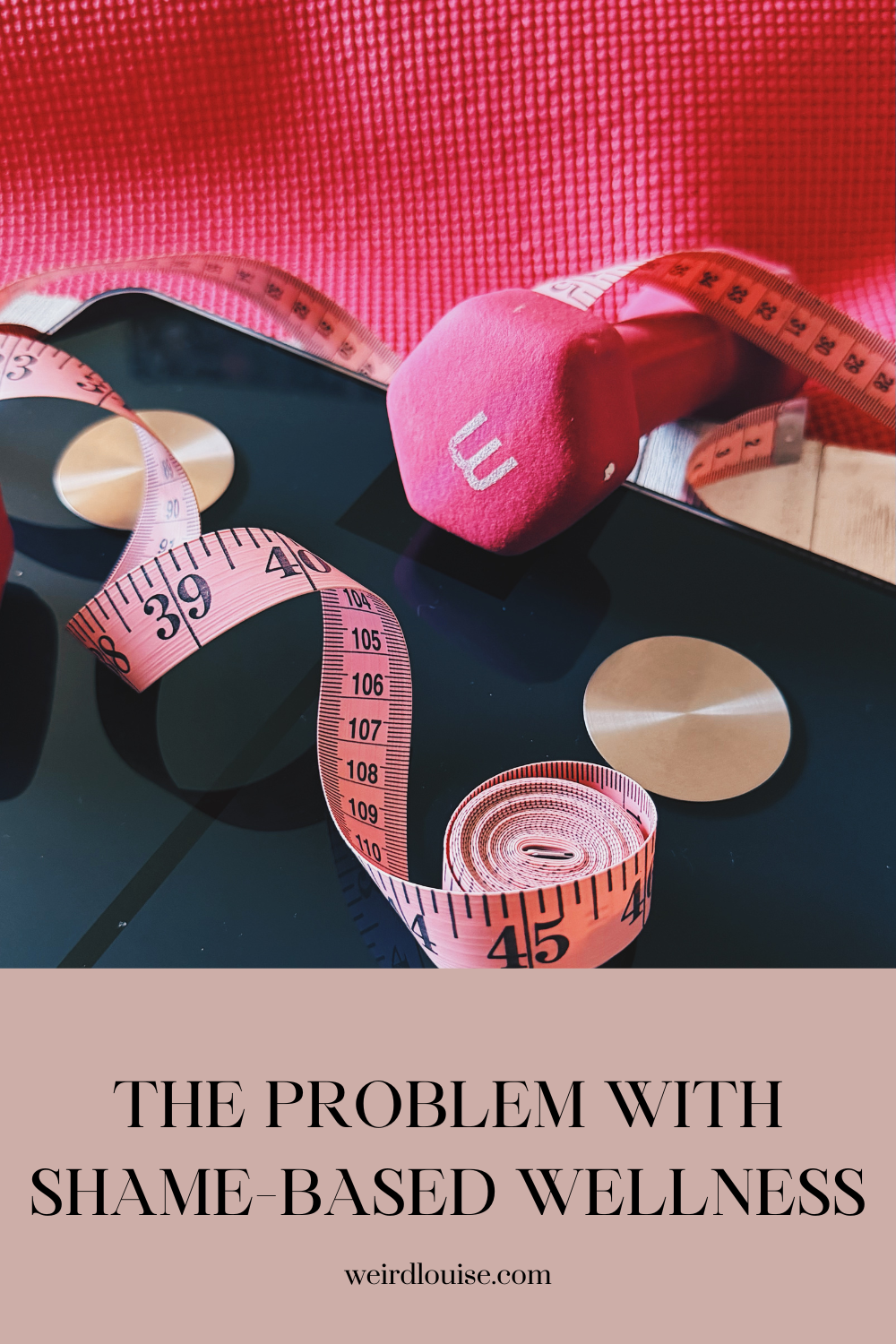
It’s often a sign that what you just consumed wasn’t actually supportive wellness — it was shame dressed up as motivation.
And shame doesn’t heal people.
Wellness Was Supposed to Help
At its best, wellness should be simple:
taking care of your body, your mind, and your life in ways that feel sustainable and supportive.
But a lot of modern wellness content has shifted into something else entirely.
Instead of support, it offers:
- pressure
- comparison
- moral judgment
- unrealistic standards
- constant self-improvement goals
It stops sounding like care and starts sounding like evaluation.
And suddenly, your health isn’t just about feeling better — it’s about proving something.
How Shame Shows Up in Wellness Culture
Shame in wellness doesn’t always look obvious.
It often shows up as “motivation.”
It sounds like:
- “If you really cared about your health, you would…”
- “No excuses.”
- “Discipline is everything.”
- “This is what healthy people do every day.”
- “You just need to try harder.”
On the surface, this can look encouraging.
But underneath, the message is usually:
If you are struggling, you are failing.
And that’s where things start to break down.
Why Shame Feels Like It Should Work (But Doesn’t)
Shame can create a short burst of motivation.
You might clean everything, restrict your eating, over-exercise, or try to overhaul your entire life overnight.
But it rarely lasts.
Because shame-based change isn’t stable — it’s reactive.
And when the initial pressure fades, what’s left is often:
- burnout
- avoidance
- guilt
- “I already messed up, so why bother” thinking
- cycles of starting over and quitting again
It turns health into a cycle of punishment and collapse instead of steady progress.
What Shame Does to the Nervous System
From a nervous system perspective, shame doesn’t create clarity — it creates threat.
When your brain feels judged or “not good enough,” it often shifts into:
- shutdown
- avoidance
- overwhelm
- anxiety
- emotional dysregulation
This is especially true if you’re already dealing with:
- ADHD or executive dysfunction
- depression or anxiety
- chronic stress
- trauma
- burnout
In those states, you don’t need more pressure.
You need support that lowers resistance — not increases it.
The Hidden Cost of “High-Performance Wellness”
A lot of wellness culture is built around an invisible ideal:
the perfectly disciplined, always-consistent, highly productive person who never struggles.
But that person doesn’t exist in real life.
And trying to live up to that standard often leads to:
- disconnection from your body
- guilt around basic needs
- fear of rest
- obsession with “optimization”
- feeling like you’re never doing enough
Health stops being something you have and becomes something you’re always trying to earn.
What Actually Supports Change
Real, sustainable change doesn’t come from shame.
It comes from:
- safety
- repetition
- realistic expectations
- flexibility
- compassion during setbacks
- systems that fit your actual life
People don’t change because they’re bullied into it.
They change because something finally feels doable.
A More Helpful Way to Think About Health
Instead of asking:
“What’s wrong with me?”
Try asking:
- What would make this easier?
- What’s one small thing I can do today?
- What actually fits my energy right now?
- What would support me instead of punish me?
These questions don’t demand perfection.
They create access.
And access is what actually leads to consistency.
You Are Not the Problem
You are not failing wellness.
Undisciplined.
You are not “behind.”
You are a person responding to real-life conditions — stress, time, energy, mental health, environment, and capacity.
No amount of shame changes those realities.
But support can.
Wellness Should Feel Like Support, Not Surveillance
If a wellness message makes you feel:
- anxious
- ashamed
- inadequate
- like you’re already behind
it’s okay to question it.
You don’t have to accept every message just because it’s labeled “health.”
Real wellness should feel like:
- clarity
- support
- flexibility
- permission to be human
Not pressure to perform.
Final Thought
You don’t need more shame to become healthier.
You don’t need more pressure to become consistent.
And you don’t need to earn care by being perfect first.
You deserve approaches to health that actually work with your life — not against it.
Related Post: Overcoming Barriers to Healthy Living: Practical Tips for Real-Life Challenges
Pin me!













Leave a Comment